
you throw a chips packet in the lake
our robot: 'noted. logged. GPS tagged. 📍'
India has 69,485 urban water bodies and almost no way to keep them clean. SCRUB deploys solar robots that skim the waste, read the water, and stream the proof — every single day.
robot variants across water body types
annual government spend on lake remediation
urban water bodies in India
India has 2.4 million water bodies — yet 16.3% are non-functional due to pollution and encroachment, and 45.2% have never been repaired or maintained. The 69,485 urban water bodies face the sharpest pressure.
Current remediation relies on manual labour: slow, hazardous, seasonal, and producing no usable data on water health. Municipal bodies have no continuous, scalable or autonomous alternative.
The National Green Tribunal has issued hundreds of orders against civic bodies for lake pollution. BBMP faces court-ordered deadlines for water quality compliance — demand for an autonomous solution is no longer optional.
Source: NITI Aayog · National Water Bodies Census · KSPCB 2024 · NGT orders
Every SCRUB product is designed for a specific water body type and deployment scenario — from still urban lakes to fast-flowing rivers. They operate independently or as a coordinated fleet.
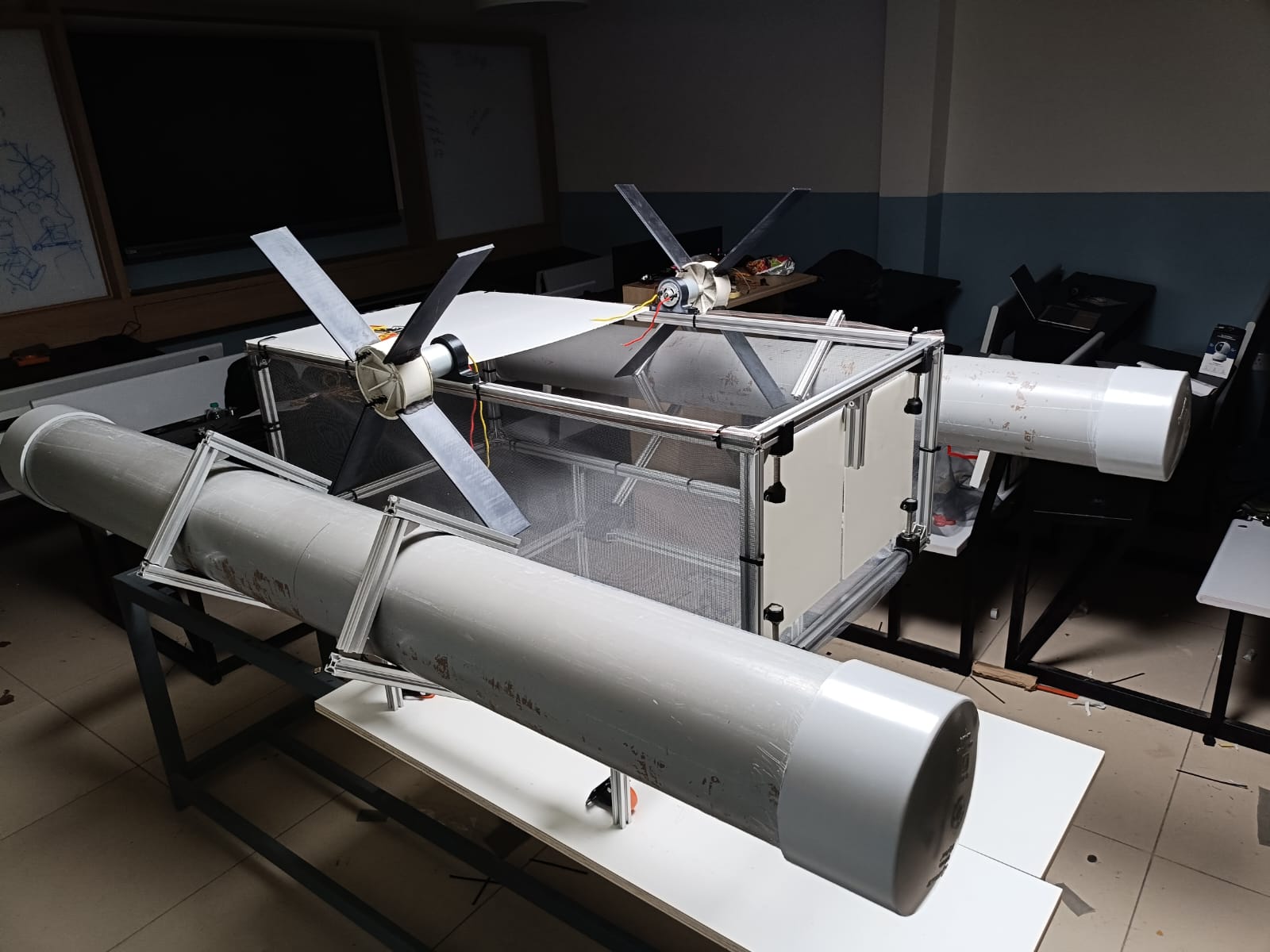
 Developed & field-validatedV1
A semi-industrial floating catamaran that removes floating plastic, organic debris, and aquatic weeds from urban lakes and reservoirs. The flagship — field-tested, patent-published.
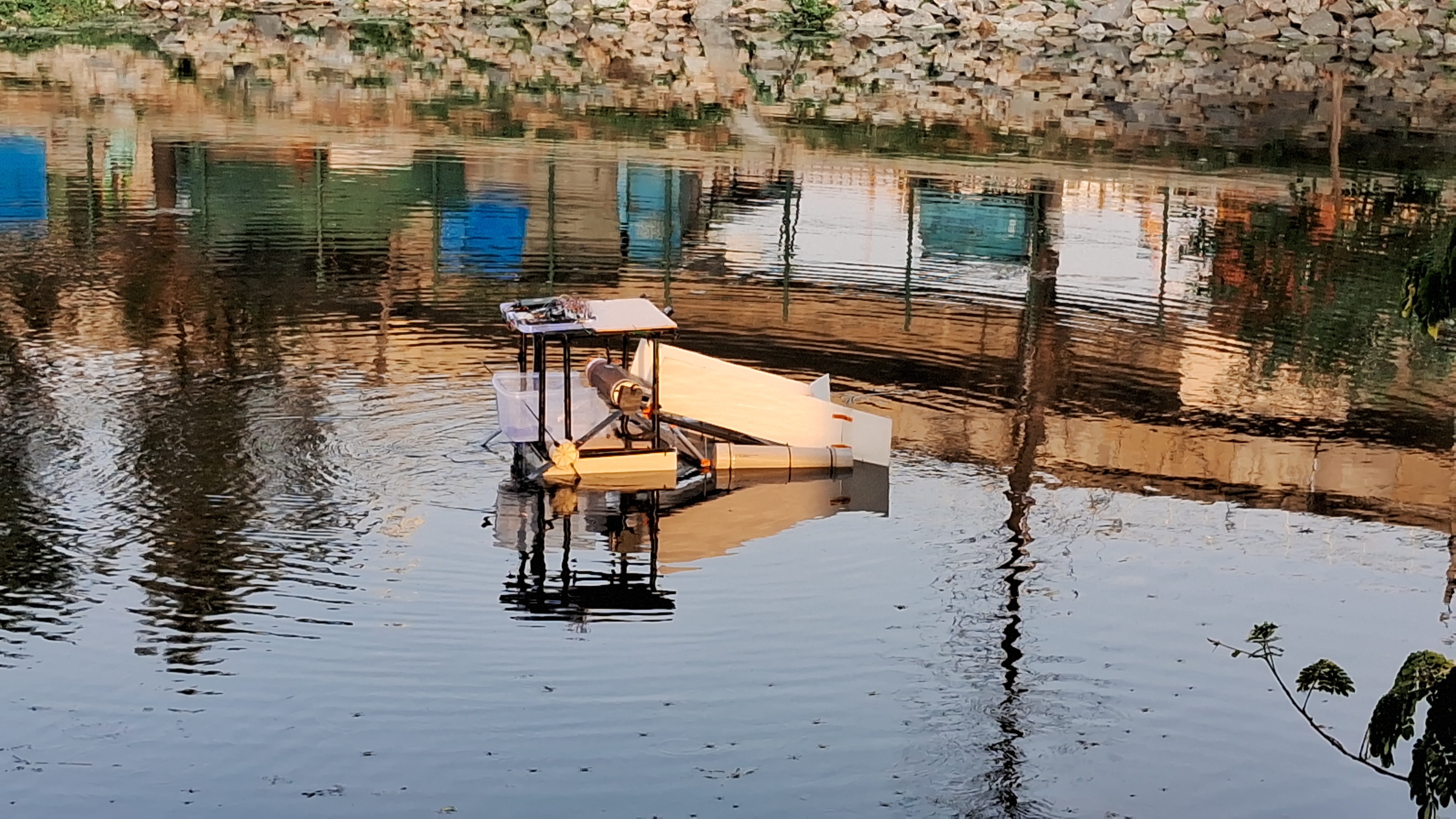
 Developed & validatedV2
A conveyor-less design that uses hydrodynamics to collect waste — no actuators, no motors for intake. Forward motion opens the door; reversing closes it.
A static shore installation for rivers and canals. Anchored at pollution chokepoints, a floating boom funnels waste into an inclined conveyor — delivering debris directly to the riverbank.
A compact, agile floating bot carrying a fully customisable sensor payload. Patrols in systematic patterns, collecting high-density spatial data and streaming it live to a cloud dashboard.
you throw a chips packet in the lake
our robot: 'noted. logged. GPS tagged. 📍'
absolutely nobody:
the lake at 4am: *bubbling ominously*
solar powered. zero diesel.
it's giving main character energy 🌞
your city has ~1,200 water bodies
you can name… two? be so fr rn
Floating plastic, thermocol, water hyacinth. The conveyor mouth swallows a 1.2 m wide lane at 0.6 m/s.
…
Modelled on Kengeri Lake field trials: ~38 kg of debris recovered per robot-hour, 300 operating days a year.
debris recovered every day
recovered per year
manual crews replaced from hazardous water work
CO₂e avoided vs diesel skimmer fleets
Engineering design begins, targeting Bengaluru's urban lake pollution crisis.
Conveyor mechanism validated. Onboard AI debris detection confirmed functional.
TRL 3Application filed with the Indian Patent Office — navigation, conveyor and IoT monitoring as one system.
FiledIndian Patent Office publishes the application.
PublishedAutonomous run with BBMP coordination. 20+ hours of cumulative field testing.
TRL 4Custom PCB v2 in fabrication alongside a redesigned 3D-printed chassis. Second Kengeri trial underway.
In fabricationPilots with municipalities, alongside the launch of V2, V3 and V4 with early commercial customers.
Coordinated fleet deployments across Indian cities, unified under one monitoring dashboard.
Underwater inspection, desilting, and a nationwide environmental data infrastructure layer.
A multidisciplinary team from RV College of Engineering, Bengaluru — spanning AI, embedded systems, IoT, hardware and mechanical design. 17 people, one lake at a time.

HoD, Computer Science

Professor, Computer Science

Hardware Development

Embedded Systems

Software · AI/ML

Software · IoT









Whether you have a lake to clean, a CSR mandate to fulfil, or a deployment question — we respond directly and quickly.
What are you interested in?